

Bird Mites: All You Need to Know About These Tiny Parasites
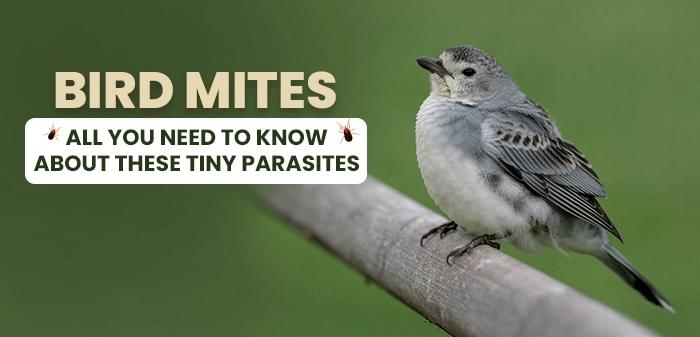
If you find your usually chirpy bird(s) irritated and itchy or dull, there is a chance they are having a bird mite infestation. While difficult to see and identify, these tiny parasites feed on your bird’s blood and can compromise their health if left untreated. So, how do you know if your avian friend is infested with bird mites, and how do you remove these menacing creatures? Let us find out.
Read on to learn about bird mites, signs of bird mite infestation, ways to treat and prevent these mites, and ways to keep yourself and your home free from these parasites.
What Are Bird Mites?
Bird mites are microscopic parasites that feed on the blood of birds. They are typically found on domestic and wild birds, including pigeons, poultry, sparrows, parrots, canaries, etc. Bird mites have 8 legs and 2 main body parts. They are generally brown or gray in color and may appear darker after feeding. Because of their tiny size, bird mites appear like walking pepper flakes. These ectoparasites lay eggs in birds’ nests or directly on the birds in their feathers. Bird mites do not fly; they can only crawl, and thrive in warmer climates.
The most common types of bird mites are scaly face & leg mites, air sac mites, feather mites, and northern fowl mites.
How to Know If Your Bird Has Mites?
If your feathered friend shows one or more of the following signs, they may be having a bird mite infestation:
- Crusty, scaly, or irritated skin around the eyes, legs, and beak
- Deep burrows or holes in the upper area of the face
- Dry, swollen, or scaly legs, and white deposits on the legs
- Restlessness at night
- Excessive preening (especially at night)
- Labored breathing, coughing, or sneezing
- Noticeable feather damage, with missing patches of feathers
Ways to Get Rid of Bird Mites
Though tiny in size, bird mites are in no way less dangerous. They feed on birds’ blood and can cause anemia in them if not treated in time. Bird mites can also lead to permanent deformities in birds when left untreated. Therefore, timely action is required. Here are a few ways to treat and prevent bird mite infestations:
- Bird mites are microscopic parasites. Identifying them on your own is difficult. The first step, therefore, is to take your avian buddy to a veterinarian who can check and suggest the best treatment for your bird’s condition.
- Treat your feathered pet with antiparasiticides, like ivermectin or moxidectin, which are known to be effective on bird mites. Vetafarm Scatt Scaly Face/ Air Sac Mite Treatment is one such option. Check with your veterinarian and go ahead with any treatment under their guidance.
- Bathe your bird in a shallow dish with lukewarm, non-chlorinated water. Bathing alone may not help get rid of mites, but it may offer some relief to your bird from irritation.
- Shift your bird to a clean, spare cage while the treatment is going on. Clean their cage thoroughly with dish soap. Dispose of porous or wooden toys, like perches, which may be infested with the mites.
- If you have multiple birds, keep the infested bird separate from other birds. It is also a good idea to treat all the birds in the house under the guidance of a veterinarian.
- Bird mites thrive in a humid environment. Use a dehumidifier in your bird’s surroundings to restrict the spread of bird mites.
Can Bird Mites Infest Homes?
The answer is a big yes. Bird mites can be carried on clothes or other pets in the house and can spread on walls, carpets, furniture, bedding, and other surfaces. If you see small black spots on walls or furniture, or clusters of small red spots on carpets, bird mites may have found their way inside your house.
What Attracts Bird Mites to Homes?
Bird mites need bird blood to thrive. But when the birds are living in abandoned nests, they look for new hosts (potentially, your pet birds). Also, when the nests the bird mites are living in are near or on your home or building, these nasty parasites find their way easily inside the house.
The best way to keep your pet bird mite-free is to vacuum carpets and hard floors regularly. You may also use pest control products, such as diatomaceous earth (DE) powder, to prevent bird mite infestations.
Can Bird Mites Spread to Humans?
Bird mites need the blood of birds to complete their life cycle and may die within three weeks in the absence of a blood meal. So, they cannot survive and grow on humans, but can definitely bite humans.
How Do You Tell If You Have Bird Mites?
A bird mite bite may look similar to the bites from other insects. There may be small red bumps on the skin and a feeling of pain. You may also feel a crawling sensation on the skin. As these parasites are nocturnal, you may experience itchiness at night due to their activity.
Take a thorough shower to eliminate mites from your body. Use a body wash for scrubbing your skin and a shampoo to clean your hair thoroughly. Use a moisturizer to soothe itching and irritation. You may also take an antihistamine or other solution under the guidance of your healthcare practitioner to reduce itching or inflammation.
In a Nutshell
Bird mites, though tiny in size, can be dangerous for your avian friend if not treated. Being vigilant about the symptoms of bird mite infestations and providing timely treatment to your bird is a prerequisite for keeping them safe and healthy. Disinfect your home and take steps to remove bird mites from your body to keep yourself and your bird’s surroundings free of these nasty creatures.